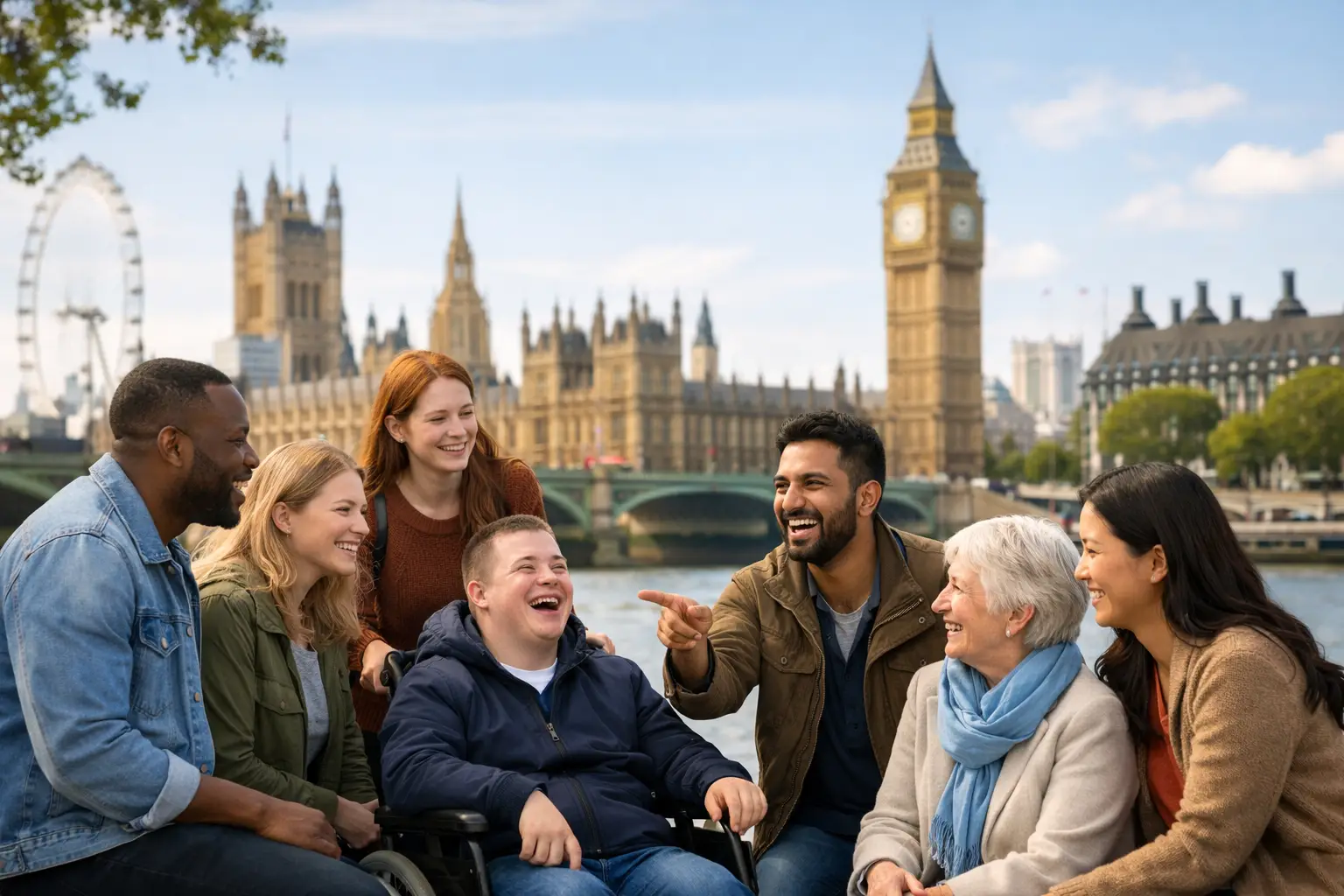
Inclusive Group Outings London Made Easy
A brilliant show can be the start of a great night, but it is often the part before the curtain rises that feels hardest. Who do you go with? Where do you meet? Will everyone already know each other? Inclusive group outings London theatre-goers can join take away those awkward decisions, replacing them with a friendly plan and a room full of people who are there for the same reason.
For many adults, the barrier to going out is not a lack of things to do. London has more than enough theatre, exhibitions, restaurants and events. The challenge is finding company, making plans that actually happen, and walking into a social setting without feeling as though you have to perform. A well-organised group outing makes the evening feel easier from the first hello.
What makes a group outing genuinely inclusive?
Inclusive does not simply mean that everyone is technically allowed to attend. It means people can arrive on their own, feel welcomed into the group and enjoy the evening without needing an existing friendship circle to lean on.
That takes a little thought. A clear meeting point matters. So does a host or organiser who knows who is coming, can introduce people naturally and keeps the mood relaxed. When an outing includes pre-show drinks or a casual meet-up, conversations have time to develop before everyone takes their seats. You are not expected to walk into a packed bar and instantly find your place.
The best groups also make room for different personalities. Some people are chatty from the moment they arrive; others prefer to listen first and join in gradually. Neither approach should feel out of place. Shared interest does much of the work. Talking about the show, a favourite performer or what else is on in the West End is far less pressured than trying to make small talk from scratch.
Safety and comfort are part of inclusion too. For women, LGBTQ+ people, over-50s attendees and anyone returning to socialising after a difficult patch, the reassurance of a structured group can make a meaningful difference. You know what the plan is, where you are meant to be and that there will be others expecting you.
Why theatre works so well for meeting people
Theatre gives a group outing a natural shape. There is a start time, a shared experience and plenty to talk about afterwards. Unlike a networking event, nobody needs to arrive with a polished introduction. Unlike a loud night out, the focus is not on being the most outgoing person in the room.
There is also a useful balance between togetherness and personal space. Pre-show drinks give people a chance to connect. The performance provides a break from conversation. Afterwards, reactions to a big number, a clever set or an unexpected ending can bring the group back together again.
That structure is especially helpful if you usually avoid making plans because social events feel too open-ended. You can join the group, enjoy the show and head home when the evening finishes, or stay for further conversation if it feels right. There is no pressure to do more than you want to do.
Theatre outings can offer better value than arranging everything independently, too. Group access and membership-based offers can make quality seats more attainable, while the social part of the night is already organised. The exact saving will depend on the production, seat availability and date, but value is about more than the ticket price. It is also about not spending a week trying to persuade friends to commit.
Choosing inclusive group outings in London that suit you
Not every group is the right fit for every person, and that is completely normal. The most useful question is not whether an outing is popular, but whether its style helps you feel comfortable taking part.
Start with the theme and the atmosphere. Some people enjoy mixed socials with a broad range of ages and backgrounds. Others feel more at ease at women’s events, LGBTQ+ gatherings or groups designed around a particular life stage. A themed social does not have to be exclusive in a negative sense. It can simply offer the comfort of shared experience and a clearer sense of belonging.
Then consider the level of structure. A large, informal meet-up may suit confident socialisers who enjoy circulating and meeting lots of people. If you are attending alone, a smaller group with introductions and an organised host may be a better first step. Neither is better universally. It depends on what helps you relax.
Practical details count as well. Look for clear information about the venue, meeting time, accessibility and what is included. If there is a pre-show gathering, it should be obvious whether you need to buy your own drink and how long the group will be there. Good organisation is not dull – it is what allows everyone to enjoy themselves.
How to make your first outing feel easy
You do not need to arrive with a list of conversation starters or a plan to make a new best friend. The aim of a first outing is simpler: enjoy a good evening and give yourself the chance to meet people naturally.
Arriving at the stated meet-up time, rather than rushing in just before the show, can help. It gives you a chance to settle, get a drink if you would like one and meet a few people before the theatre begins. If you are nervous, tell the host that it is your first time. A welcoming organiser will know how to make introductions without putting you on the spot.
It can also help to set a gentle expectation for yourself. Perhaps you want to speak to two new people, stay for the pre-show meet-up or share your thoughts after the performance. Those are realistic goals. Friendships are usually built through seeing familiar faces again, not through one extraordinary conversation.
Remember that other attendees may be feeling exactly as you are. Plenty of people join group outings because their friends are busy, their interests differ from those around them, they are new to the area or they simply want to widen their social circle. Turning up alone is often the most common thing in the room.
The value of an ongoing social group
A one-off event can be enjoyable. Regular outings create something more lasting: familiarity. When you see people at different shows, seasonal events or occasional trips away, conversations become easier. You start recognising names and faces. Someone you met briefly over drinks at one performance may become the person you chat with at the next.
That is why a membership model can work well for people who want a steadier social life rather than a single night out. It creates a rhythm of opportunities without requiring you to be the person who always organises the group chat, books the table or chases everyone for confirmation.
West End Outings is built around that idea. Members can enjoy discounted theatre tickets alongside hosted social experiences, from pre-show meet-ups to themed groups and getaways. The focus is not just on getting into the theatre, but on making the whole evening feel welcoming and worth looking forward to.
Regular events also let you choose your moments. You might attend every month, select only the shows you love or try a new social group when you feel ready. There is no single correct way to participate. The important thing is having an open invitation to join in.
A night out that does not rely on luck
Too many social plans depend on perfect timing: friends being free, everyone agreeing on a budget and somebody taking charge. Inclusive group outings offer another route. The show is chosen, the plans are clear and the group is ready to welcome new people.
You still get the excitement of a night in the West End – the anticipation before the lights go down, the buzz during the interval and the conversations afterwards. The difference is that you do not have to arrange it all alone. Sometimes the easiest way to find your people is simply to take your seat beside them.