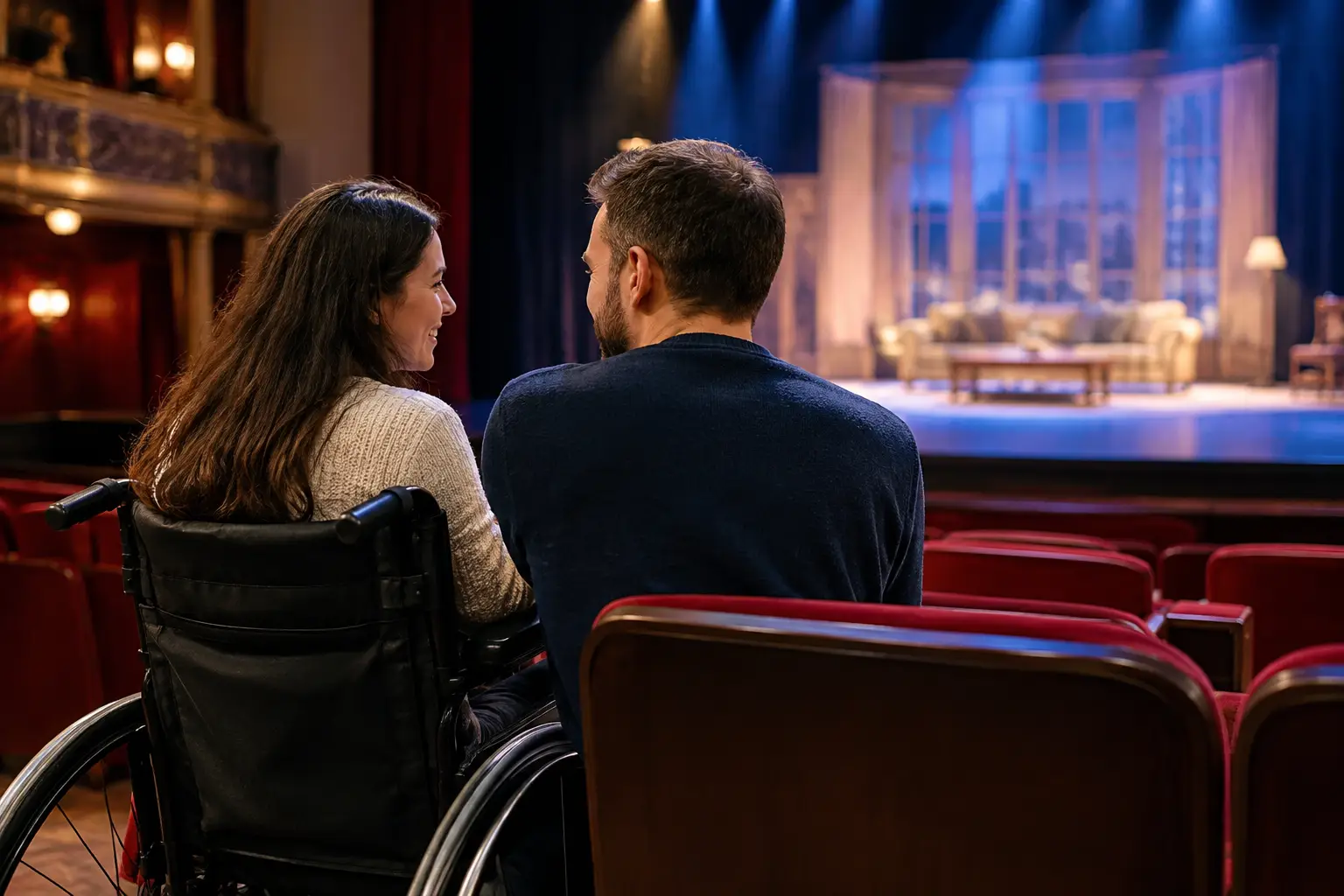
Accessible Theatre Booking Without the Guesswork
A great night at the theatre starts well before the overture. Accessible theatre booking should make it easier to choose a show, secure suitable seats and arrive knowing what to expect – not leave you chasing answers or worrying about whether you will be comfortable.
Access needs are personal. You may use a wheelchair, need step-free routes, have a visual or hearing impairment, require an aisle seat, benefit from a relaxed performance, or simply need clear information before joining a new group. Whatever helps you enjoy the evening, the right booking process gives you the space to ask, plan and feel welcome.
What accessible theatre booking should cover
Accessible booking is about more than a seat marked on a plan. It is the whole experience: getting to the venue, entering the building, using facilities, finding your seat, enjoying the performance and leaving at a comfortable pace.
Most London theatres have their own access arrangements, and older buildings can vary greatly. One venue may have step-free access to the stalls but not to every seating level. Another may offer wheelchair spaces, transfer seats, accessible toilets, hearing assistance or captioned performances on selected dates. The details matter, so it is always worth checking the specific theatre and performance rather than assuming that one show will work the same way at another venue.
For many people, an accessible experience also means knowing there is a friendly point of contact. Clear pre-event information can remove a lot of uncertainty, particularly if you are attending alone, travelling into central London or visiting a theatre for the first time.
Start with the experience you want
Before booking, think about what would make the evening work well for you. You do not need to explain more than you are comfortable sharing, but being specific can help the venue or organiser offer the most useful options.
Perhaps you need a wheelchair space and room for a companion. Perhaps stairs are difficult, so stalls seating or lift access is essential. You may prefer to sit near an exit, avoid a tightly packed row, or want to know whether there will be flashing lights, loud sound effects or haze during the production.
There is no single definition of accessible. Some theatre-goers need physical access support, while others value predictability, a quieter welcome or the reassurance of arriving with a group. All are valid reasons to ask questions before you commit.
Questions worth asking before you book
A little preparation can prevent a disappointing evening. If availability is limited, ask early, especially for wheelchair spaces, companion tickets and performances with access services.
It can help to ask whether the theatre has step-free access from street level and which entrance is best to use. Check where accessible toilets are located, whether there are steps on the route to your seats, and if staff can help with wayfinding when you arrive. If you use a hearing aid, ask about the type of hearing assistance available and whether it needs to be collected before the show.
For a captioned, audio-described, British Sign Language interpreted or relaxed performance, confirm that the service is scheduled for your chosen date. Seating position can make a real difference for these performances. A caption unit, interpreter or audio-description receiver may be easier to use from particular areas of the auditorium, so the cheapest available seat is not always the best choice.
If you are attending as part of a social outing, it is also sensible to ask how the group will meet, where pre-show drinks are taking place and whether the meeting venue is accessible. A theatre may suit your needs perfectly, but a pub up a flight of stairs may not. A considerate organiser will be happy to discuss the full plan.
Why booking through a social group can feel easier
Going to the theatre with others should not mean surrendering control over your needs. At its best, a hosted outing gives you more information, a familiar face to look for and a natural way to meet people before the lights go down.
For solo theatre lovers, the practical side matters just as much as the social side. Meeting the group at an agreed place can make navigating a busy area less daunting. Pre-show drinks or a relaxed meetup offer a chance to settle in, chat and avoid the feeling of walking into the auditorium alone. If you prefer a quieter start, you can arrive closer to curtain-up and let the organiser know what suits you.
West End Outings is built around that sense of welcome. Members join curated theatre nights rather than simply buying a ticket, with the option to meet others around a shared love of shows. The social element is structured but low-pressure: there is no need to perform, make instant friendships or stay later than you want to.
That said, group bookings have practical limits. Access spaces are often limited by the theatre, and a particular seating request may not be available once a group allocation has been made. The earlier you raise your requirements, the more likely there is to be time to explore suitable alternatives. Sometimes a different date, performance or show is the better choice.
Share what is useful, not what feels intrusive
You are entitled to ask for the adjustments and information you need without turning your booking into a medical history. A simple message such as, “I need step-free access and an aisle seat if possible,” gives an organiser a clear starting point.
If your needs involve a companion ticket, wheelchair position, assistance dog or specialist access service, mention this at the earliest opportunity. You may be asked for information required by the venue, but the purpose should be to arrange your visit, not to make you justify it.
It is also reasonable to ask what will happen if plans change. Find out when tickets will be confirmed, whether seating details may be allocated later, and who to contact on the evening if you cannot find the group or encounter an access problem.
Making the evening more comfortable
Once your booking is in place, a few small choices can make the outing feel calmer. Plan your journey with enough time for station lifts, traffic, toilets and the occasional crowded pavement. Central London is lively before a show, and rushing is rarely enjoyable.
Save the theatre address and the organiser’s event details somewhere easy to find. If you have access requirements that staff need to know about on arrival, introduce yourself early rather than waiting until the auditorium is filling up. Front-of-house teams are usually best placed to advise on entrances, facilities and the quickest route to your seat.
For sensory considerations, check the production guidance where available. A relaxed performance can be a good fit for some people, but it depends on your preferences. Others may prefer a standard performance with an aisle seat, ear defenders, a planned break in the foyer or the confidence of knowing they can step out if needed.
Do not feel obliged to stay for every part of a social plan. You might join the pre-show meetup, go straight to your seat and head home after the curtain call. Or you may skip drinks, enjoy the show and stay for a chat afterwards. A welcoming group makes room for different energy levels and different ways of taking part.
Access is part of feeling included
Theatre is at its best when the story on stage is only one part of the night. The anticipation, the shared reactions and the conversation afterwards all matter. But none of that should depend on someone having to overcome avoidable barriers just to get through the door.
Good accessible theatre booking is clear, respectful and flexible. It recognises that the best seat is not the same for everyone, that plans sometimes need adjusting, and that asking for support should be ordinary. When the practical details are handled with care, you can put your attention where it belongs: enjoying the show and the people beside you.