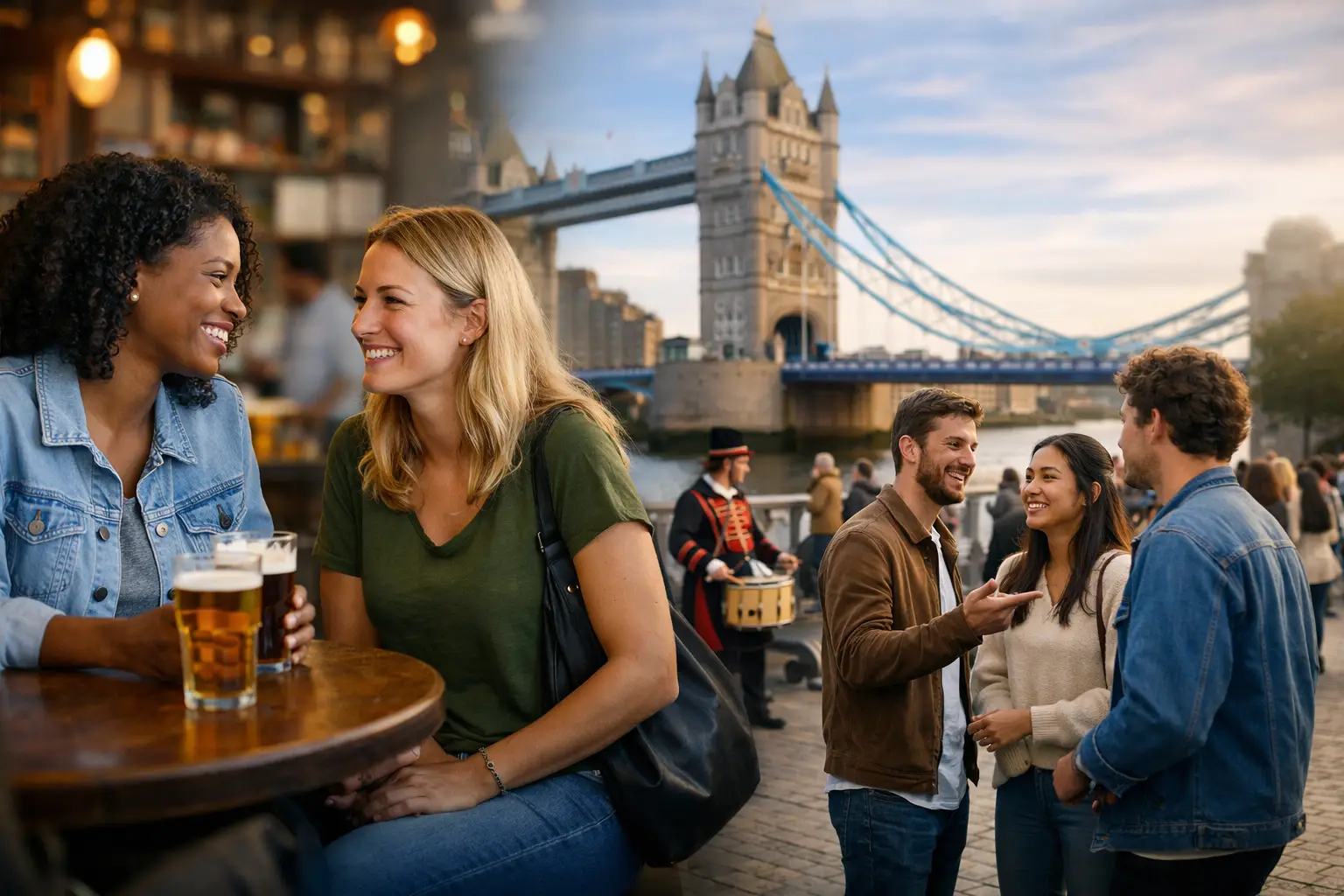
Best Cultural Activities to Meet People in London
A packed bar can make meeting someone feel like hard work. A shared reaction to a brilliant curtain call, an exhibition that sparks a conversation, or a pottery class where everyone is learning as they go gives you something much easier: a natural place to start. The best cultural activities to meet people are not necessarily the busiest ones. They are the ones that put people together around a genuine shared interest, with enough time and structure for a chat to become a connection.
For many adults, making new friends is less about confidence than circumstance. Friends move, routines change, colleagues are busy, and arranging plans can feel surprisingly complicated. Cultural activities offer a more relaxed alternative to dating apps, loud nights out or formal networking events. You arrive with a reason to be there, and the conversation does not have to begin with a perfect opening line.
Why culture makes meeting people feel more natural
When everyone has chosen to see the same show, hear the same author or try the same workshop, there is already common ground. You can ask what they thought of a character, compare favourite scenes, or simply laugh about the part of the class that did not go quite to plan. These are small exchanges, but they make socialising feel far less forced.
The best settings also have a rhythm. There may be time to chat before an event begins, a break in the middle, or a drink afterwards. That matters. A brief conversation before a performance can become a much warmer one after it, once you have experienced something together.
There is a trade-off, of course. Going to a large public museum on your own may be culturally rewarding, but it does not automatically create opportunities to meet anyone. Choosing an organised group visit, a guided tour or a social evening adds the missing ingredient: a clear invitation to talk.
The best cultural activities to meet people
Theatre socials and group show nights
Theatre is one of the strongest choices for people who want a sociable night without the pressure of having to entertain one another all evening. A great show gives the group a shared experience, while pre-show drinks, interval chats and a post-show discussion provide the social space around it.
It also suits different personalities. If you are naturally chatty, there are plenty of moments to get to know people. If you are a little quieter or attending alone for the first time, you can settle in knowing the performance will carry part of the evening. You never have to fill every silence.
Structured theatre outings are particularly helpful because the host has already done the organising. There is no awkward question of who is booking, where everyone is sitting or whether you will be the only person who turns up. At West End Outings, the focus is on making the whole evening feel welcoming, from the group meetup through to sharing the excitement of the show.
Creative workshops where conversation has a purpose
Ceramics, painting, printmaking, flower arranging, life drawing and cookery classes all create easy openings for conversation. You can ask about a technique, admire somebody’s work or compare how a recipe turned out. The activity gives everyone a role, which can be especially reassuring if you do not enjoy walking into an unstructured social event.
Look for courses rather than one-off sessions if friendship is your main aim. A weekly class gives you repeated contact, and that is where familiarity grows. By the third or fourth week, people are more likely to suggest a coffee afterwards or swap numbers for another class.
Do not worry if you are not particularly artistic. Beginner-friendly workshops tend to be more sociable precisely because nobody expects perfection. The point is to make something, have a good time and share the slightly messy process.
Book clubs, author talks and writing groups
A book club can attract people who enjoy thoughtful conversation but would rather not make small talk for its own sake. You arrive with a topic ready and waiting. Even when people disagree about a novel, the discussion is usually friendly, and a different opinion can make the evening more memorable.
Author events and literary festivals can work well too, especially when they include a signing, Q&A or café meetup afterwards. The drawback is that an audience alone is not always a social group. If you want to meet people rather than only attend, choose a local reading group, a discussion-led event or a club that makes space for newcomers.
Writing groups offer a gentler version of the same idea. Sharing work can feel personal, so choose a group with clear ground rules and a supportive atmosphere. The friendships that form can be especially meaningful, but it may take a few sessions before you feel fully at ease.
Guided walks, local history and heritage events
A guided walk is ideal if sitting across from strangers feels a little intense. You are moving, looking at your surroundings and listening together, so conversation can happen in short, comfortable bursts. London and towns across the UK offer everything from architecture walks and cemetery tours to neighbourhood history trails and hidden-food tours.
Smaller groups are often better for connection than huge public tours. A group of 10 to 20 people gives you a realistic chance to speak to more than one person, without feeling as though you need to perform for a room. If the organiser suggests a pub, café or museum visit afterwards, stay for it if you can. That is often where acquaintances become friends.
Choirs, music groups and social dancing
Music is wonderfully good at making a group feel like a group. Community choirs welcome people of many abilities, and singing alongside others can quickly create a sense of belonging. Rehearsals are regular, performances provide a shared goal, and the conversation usually continues over a drink afterwards.
Social dance classes have a similar benefit, although they are not for everyone. They involve more direct interaction and can feel daunting at first, particularly if you are attending alone. Choose a beginner session with partner rotation and an instructor who sets a respectful, inclusive tone. You do not need to arrive with a partner, and the changing pairs mean you are not stuck talking to only one person.
Museum late openings and exhibition groups
Museum lates often combine exhibitions, talks, music and a relaxed after-hours atmosphere. They can feel more social than a daytime visit, but they vary widely. Some are lively and crowded, while others are better for quietly taking in an exhibition.
For a stronger chance of meeting people, go with a social group or book an event that includes a guided element. A curator talk or themed discussion gives people something specific to respond to, which is much easier than trying to start a conversation while everyone is silently reading wall labels.
How to turn one outing into a real friendship
Showing up is the biggest step, but friendships usually need a little follow-through. Aim to speak to two or three people rather than trying to meet the whole room. Ask simple, present-tense questions: what brought them along, whether they have seen the artist or performer before, or what they are planning to do next culturally.
Be honest if you have come alone. It is often a relief for somebody else to hear, because plenty of people are in exactly the same position. You do not need to make a big announcement of it. A simple, “I thought I would give this a try on my own,” is enough.
If a conversation feels easy, make a small, specific suggestion before you leave. You might ask whether they are interested in the next outing, offer to share details of another exhibition, or suggest a coffee after the next class. Vague promises to “do something soon” are easy to lose; a modest plan gives the connection somewhere to go.
Choose a setting that suits you
There is no single best activity for everyone. Theatre socials may suit you if you love a shared night out and appreciate a host-led group. A recurring craft class may be better if you prefer gentle conversations that develop over time. If you enjoy movement and a changing view, try a guided walk. If you want a regular community, consider a choir or reading group.
The key is not to choose the activity that sounds most impressive. Choose one you would still enjoy if you only had one good conversation that evening. That takes the pressure off, and people are naturally drawn to someone who is genuinely pleased to be there.
A cultural outing can start with a ticket, a class booking or a walk around a familiar street. With the right group and a little willingness to return, it can become the beginning of the people you look forward to seeing next time.